Yes. Skinless turkey is low in saturated fat. Leave the skin and watch processed turkey products for salt.
A 3 oz (85 g) serving of roast turkey breast without skin has about 0.5 g of saturated fat, and dark meat about 1.5 g. The skin is the problem: an ounce of roast turkey skin has about 3 g. Controlled trials found that white and red meat had a similar effect on LDL, and that both raised LDL more than non-meat protein, so turkey is a good choice mostly because it replaces fattier meat, not because it lowers cholesterol itself.
Turkey: nutrition per serving
| Food and serving | Sat fat | Cholesterol | Fibre | kcal |
|---|---|---|---|---|
| Turkey breast, no skin, roasted3 oz (85 g) · FDC 171496 | 0.5 g | 68 mg | 0 g | 125 |
| Turkey dark meat, no skin, roasted3 oz (85 g) · FDC 171091 | 1.5 g | 109 mg | 0 g | 147 |
| Turkey skin, roasted1 oz (28 g) · FDC 171082 | 3.2 g | 50 mg | 0 g | 129 |
| Turkey sausage, cooked1 serving (57 g) · FDC 173871 | 1.3 g | 52 mg | 0 g | 112 |
| Ground beef, 80% lean, broiled, for comparison3 oz (85 g) · FDC 171797 | 5.7 g | 75 mg | 0 g | 230 |
| Chicken thigh with skin, roasted, for comparison3 oz (85 g) · FDC 173625 | 3.5 g | 113 mg | 0 g | 197 |
Dietary cholesterol in poultry is similar to other meats (about 70 to 110 mg per 3 oz), but for most people saturated fat affects LDL more. Source: USDA FoodData Central (public domain); search the FDC number to see the full record. Values are rounded and vary by brand and recipe.
Turkey against your daily saturated fat
Skinless breast barely registers on a 13 g day. A turkey sandwich with two thick slices of roast breast uses under 1 g. A plate of dark meat with a few pieces of skin uses closer to 5 g.
Bars show each serving against about 13 g a day, the American Heart Association's target (under 6% of 2,000 calories) for people lowering LDL. Work out your own number with the saturated fat calculator.
What the research says
In the APPROACH trial (2019), 113 adults ate diets with red meat, white meat or non-meat protein for a month each, with saturated fat held the same. Red and white meat had about the same effect on LDL and apoB, and both were higher than non-meat protein. A 2019 meta-analysis of 36 trials reached a similar conclusion. In practice, swapping red or processed meat for skinless poultry helps mainly because poultry is leaner, and swapping some meat for beans, lentils or tofu helps more.
Choosing and cooking turkey
- Choose breast for the leanest option, and remove the skin before eating.
- Check the mince. Ground turkey labelled 93% or 99% lean is lower in saturated fat than regular ground turkey, which can include skin and dark meat.
- Watch processed turkey: deli slices, sausages and bacon can be high in salt, and some turkey sausages contain pork fat. Check the label.
- Roast on a rack, use stock or olive oil for basting rather than butter, and skim the fat from gravy.
- Leftovers: turkey soup with beans and vegetables, or sandwiches with salad.
For the holiday meal, see Thanksgiving with high cholesterol and Christmas dinner.
General information, not medical advice
This page is for education and doesn't diagnose or treat anything. If you have high cholesterol, take medication or have another health condition, check changes to your diet with your doctor or a registered dietitian.
Frequently asked questions
Is turkey good for high cholesterol?
Yes, skinless turkey breast is low in saturated fat (about 0.5 g per 3 oz) and is a good lean protein. Dark meat has a bit more and the skin has the most, so leave the skin off.
Is turkey better than chicken for cholesterol?
Skinless turkey breast and skinless chicken breast are both very low in saturated fat and are about equal. The skin, dark meat and processed forms matter more than the species.
Is turkey bacon healthier for cholesterol?
Turkey bacon usually has less saturated fat than pork bacon, but it is still a processed meat that is high in salt. Check the label for saturates per serving.
Is ground turkey low in cholesterol?
It depends on the fat percentage. Lean (93% or 99% lean) ground turkey is low in saturated fat; regular ground turkey can include skin and dark meat and has more.
How much turkey can I eat with high cholesterol?
A portion of 3 to 4 oz (85 to 115 g) cooked skinless turkey a few times a week fits easily into a cholesterol-lowering diet. The NHS advises people who eat more than 90 g of red or processed meat a day to cut down to 70 g.
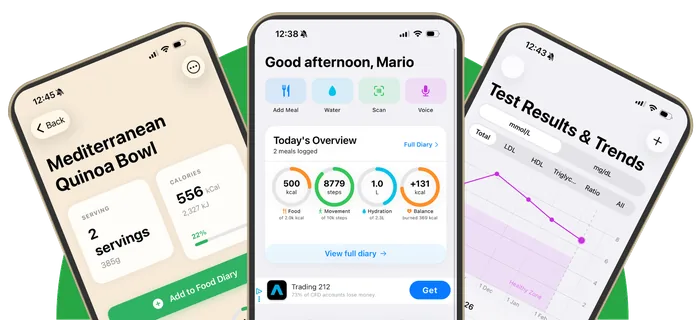
Scan or log turkey in Heart Tracker
Search turkey or scan the pack to log its saturated fat, cholesterol and salt per serving, then compare with beef or chicken in the same day.
- Barcode scanner
- LDL & HDL trends
- Voice meal logging
Related guides
Sources
- Bergeron N, et al. Effects of red meat, white meat, and nonmeat protein sources on atherogenic lipoprotein measures in the context of low compared with high saturated fat intake: a randomized controlled trial. Am J Clin Nutr. 2019;110:24–33.
- Guasch-Ferré M, et al. Meta-analysis of randomized controlled trials of red meat consumption in comparison with various comparison diets on cardiovascular risk factors. Circulation. 2019;139:1828–1845.
- USDA FoodData Central: turkey breast (FDC 171496), dark meat (171091), skin (171082), turkey sausage (173871), ground beef 80% lean (171797), chicken thigh with skin (173625).
- NHS: Meat in your diet.
- American Heart Association: Saturated fat (aim for under 6% of calories, about 13 g on 2,000 calories).