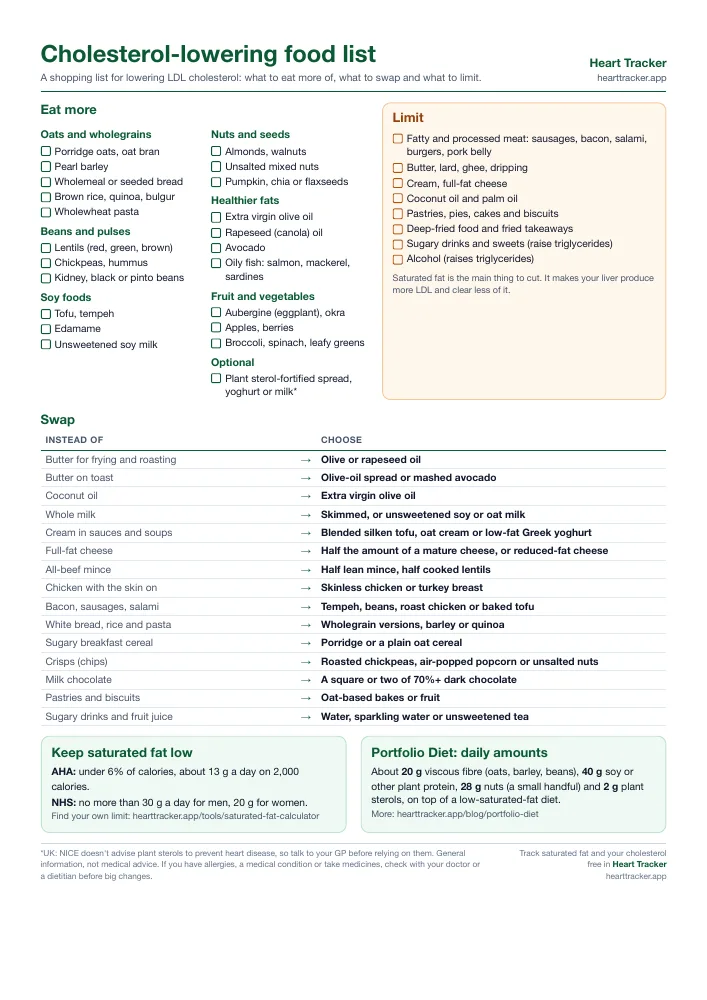
A one-page shopping list for lowering LDL cholesterol with food. It's grouped into what to eat more of, simple swaps, and what to limit, with tick boxes so you can take it to the supermarket or stick it on the fridge.
General information, not medical advice
This list is for education. If you have food allergies, kidney disease or another medical condition, or take regular medicines, check with your doctor or a dietitian before making big changes to what you eat. Don't stop or change any medicine because of something you read here.
What's on the list
Eat more
Foods that help lower LDL: oats, barley and other wholegrains; beans, lentils and chickpeas; soy foods such as tofu, edamame and unsweetened soy milk; unsalted nuts and seeds; olive and rapeseed (canola) oil, avocado and oily fish; and fruit and vegetables, including aubergine (eggplant) and okra. Oats, barley and beans are rich in viscous (soluble) fibre, which binds bile acids in your gut so your liver pulls more cholesterol out of your blood.
Swap
Fifteen everyday swaps that cut saturated fat without giving up whole meals: oil instead of butter for cooking, half lentils in your mince, skinless chicken, wholegrain bread, rice and pasta, and roasted chickpeas or unsalted nuts instead of crisps. There are 100 more in foods that lower cholesterol: 100 easy swaps.
Limit
The main sources of saturated fat, which makes your liver produce more LDL and clear less of it: fatty and processed meat, butter, lard, ghee, cream, full-fat cheese, coconut and palm oil, and pastries, pies, cakes and biscuits. Sugary drinks and alcohol are on the list too, because they raise triglycerides.
Daily targets
The bottom of the page has the daily saturated fat limits (AHA: under 6% of calories, about 13 g on 2,000 calories; NHS: no more than 30 g for men and 20 g for women) and the daily amounts from the Portfolio Diet: about 20 g of viscous fibre, 40 g of soy or other plant protein, 28 g of nuts and 2 g of plant sterols. In the UK, NICE doesn't advise plant sterols to prevent heart disease, so talk to your GP before relying on them.
How to use it
- Start small. Pick two or three swaps a week rather than changing everything on day one. Small changes that stick add up.
- Shop with it. Tick the foods you'll buy this week. Aim to get something from each "eat more" group most days.
- Check labels for saturated fat. Compare similar products per 100 g, and use the saturated fat calculator to find your daily limit.
- Re-test after 2 to 3 months. Diet changes take a few weeks to show in your LDL. Log each result on our printable test results log.
Sources
- American Heart Association: Saturated fat
- NHS: Fat, the facts
- Jenkins DJA, et al. Effect of a dietary portfolio of cholesterol-lowering foods given at 2 levels of intensity of dietary advice on serum lipids in hyperlipidemia. JAMA. 2011;306(8):831–839.
- Blumenthal RS, et al. 2026 ACC/AHA Guideline on the Management of Dyslipidemia. JACC. 2026
- NICE NG238: Cardiovascular disease: risk assessment and reduction, including lipid modification
Frequently asked questions
What foods lower cholesterol the most?
Foods high in soluble fibre, such as oats, barley, beans and lentils, help remove cholesterol through your gut. Unsaturated fats from olive oil, rapeseed oil, nuts and oily fish, plus soya foods like tofu, also support lower LDL. They work best when they replace foods high in saturated fat, such as butter, fatty meat, cheese and pastry.
What foods should I limit with high cholesterol?
Mainly foods high in saturated fat: fatty and processed meat, butter, lard, ghee, cream, full-fat cheese, coconut and palm oil, and pastries, pies, cakes and biscuits. Sugary drinks and alcohol mainly raise triglycerides.
How much saturated fat should I eat a day?
The American Heart Association advises under 6% of calories, about 13 g a day on 2,000 calories. The NHS sets a maximum of 30 g a day for men and 20 g for women. Our saturated fat calculator works out your own limit.
Is the food list free to print and share?
Yes. Download the A4 or US Letter PDF, print as many copies as you like and share the link with anyone who might find it useful.
Track it automatically in Heart Tracker
The list tells you what to eat. Heart Tracker shows whether it’s working: it counts saturated fat and fibre in everything you log, with barcode scanning, and charts your LDL from each test so you can see your numbers move. Free on iPhone, no account needed.
Download Heart Tracker Free