Alcohol doesn't contain cholesterol, but it shows up in your lipid results. The clearest link is with triglycerides: heavier drinking raises them, and cutting back lowers them. Alcohol also raises HDL slightly, but that hasn't been shown to protect your heart. If you're thinking of Dry January, here is what to expect.
The short version
Triglycerides are most likely to change, especially if you drink heavily or your levels are already high. LDL doesn't change directly, but swapping drinks for water and snacks for fibre may help it indirectly. HDL may dip slightly, which isn't a reason to start drinking. The NHS limit is 14 units a week.
What alcohol does to each number
- Triglycerides: alcohol raises triglycerides, particularly in people who drink heavily or who already have high levels. The 2026 ACC/AHA guideline advises keeping alcohol to a minimum if your triglycerides are in the 150 to 499 mg/dL range (1.7 to 5.6 mmol/L).
- HDL: a 2011 meta-analysis of 44 intervention studies found that drinking raised HDL by about 0.094 mmol/L (3.6 mg/dL). But raising HDL this way hasn't been shown to reduce heart disease, and the NHS says the old idea that a little alcohol is good for the heart has been revised.
- LDL: alcohol doesn't contain saturated fat or cholesterol, so it has no direct effect on LDL. Cream liqueurs and cocktails made with cream or coconut do add saturated fat.
- Weight: alcohol is energy-dense (about 7 kcal a gram). Cutting down often means losing weight, which tends to improve triglycerides and LDL slightly.
More in our alcohol food check.
What a drink is worth
| Food | Serving | Saturated fat | Cholesterol | kcal |
|---|---|---|---|---|
| Red wine, medium glass | 175 ml (about 2.3 units) | 0 g | 0 mg | 125 |
| Beer, regular, pint | 568 ml (about 2.8 units) | 0 g | 0 mg | 244 |
| Spirits, 80 proof | 1.5 fl oz (44 ml) | 0 g | 0 mg | 97 |
| Cream liqueur | 1.5 fl oz (47 g) | 4.5 g | 27 mg | 154 |
A pint of beer and a glass of wine each come to around 150 to 250 kcal. Over a month, ten fewer pints is a lot of calories.
Making the most of a month off
- Take a baseline first, if you can. A recent test lets you see what changed.
- Test at the end, not the day after a heavy night. Follow your lab's fasting advice, and wait a few days after any big drinking occasion.
- Replace, don't just remove. Alcohol-free beer, sparkling water with lime or a spiced fruit tea take the place of the evening drink. Watch the sugar in soft drinks, since sugar also raises triglycerides.
- Add fibre and movement. A month is a good moment to start oats, beans and a daily walk. See our 30-day plan.
- Afterwards, keep within the NHS guideline of 14 units a week, spread across several days, with alcohol-free days.
If you are a heavy drinker, don't stop suddenly without medical advice, because withdrawal can be dangerous. Talk to your GP.
This is general information, not medical advice. If you take cholesterol medication or have a heart condition, check changes to your diet with your doctor, dietitian or pharmacist.
Sources
- NHS: Calculating alcohol units (14 units a week or less).
- Blumenthal RS, Morris PB, et al. 2026 ACC/AHA Guideline on the Management of Dyslipidemia. J Am Coll Cardiol. 2026;87(19). Section on hypertriglyceridemia.
- Brien SE, et al. Effect of alcohol consumption on biological markers associated with risk of coronary heart disease: systematic review and meta-analysis of interventional studies. BMJ. 2011;342:d636.
- NHS: Alcohol and heart health.
- USDA FoodData Central (SR Legacy), values per serving calculated from the per-100 g record: FDC 173190, 168746, 174815, 175098. fdc.nal.usda.gov
Frequently asked questions
Does giving up alcohol lower cholesterol?
It may lower triglycerides, especially if you drank heavily or your levels were high. It does not directly change LDL, and HDL may dip slightly. How much changes depends on how much you drank and what you replace it with.
Does alcohol raise HDL?
Yes, a little. A meta-analysis of intervention studies found about 0.094 mmol/L (3.6 mg/dL) higher HDL with drinking. But this hasn't been shown to protect the heart, so it isn't a reason to drink.
Is wine good for cholesterol?
Not in a way that justifies drinking it. Red wine has no cholesterol or fat, but studies suggesting heart benefits were observational and may reflect other differences between drinkers and non-drinkers. The NHS says the old idea that a little alcohol is good for the heart has been revised.
How long after stopping alcohol will my triglycerides drop?
Triglycerides can start to fall within days to weeks of cutting back, especially in people whose levels were raised by alcohol. A repeat test after a month or more shows the change.
How much alcohol is safe with high cholesterol?
The NHS advises no more than 14 units a week for everyone, spread over three or more days. If your triglycerides are high, your doctor may advise less or none.
Chart your triglycerides and HDL
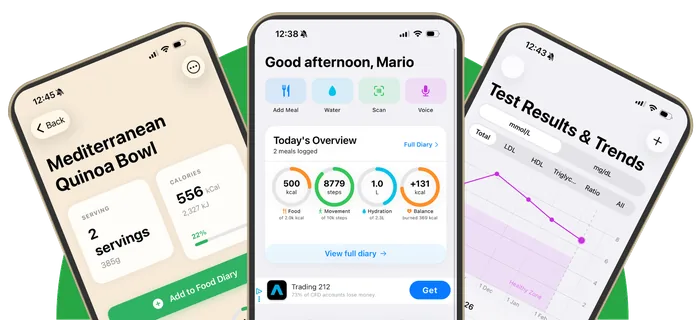
Add your before-and-after results to Heart Tracker to see how your triglycerides, HDL and LDL changed after your month off.
- Barcode scanner
- LDL & HDL trends
- Voice meal logging