Fine now and then. Go for thin crust, vegetables and less cheese; skip pepperoni and sausage.
A slice of thin-crust cheese pizza has about 4 g of saturated fat, and a typical serving of two or three slices uses most of a 13 g day. Almost all of it comes from the cheese, and processed meat toppings add more. The crust has little saturated fat, so a vegetable-topped pizza with less cheese is a much better version of the same dinner.
Pizza: nutrition per serving
| Food and serving | Sat fat | Cholesterol | Fibre | kcal |
|---|---|---|---|---|
| Cheese pizza, thin crust, frozen, cooked1 slice (69 g) · FDC 170373 | 3.9 g | 14 mg | 2.1 g | 181 |
| Cheese pizza, regular crust, frozen, cooked1 serving (151 g) · FDC 170317 | 6.5 g | 21 mg | 3.3 g | 405 |
| Cheese pizza, rising crust, frozen, cooked1 serving (139 g) · FDC 170714 | 5.3 g | 22 mg | 3.5 g | 361 |
| Mozzarella, part-skim, for comparison1 oz (28 g) · FDC 170847 | 2.8 g | 18 mg | 0 g | 71 |
| Cheddar, for comparison1 oz (28 g) · FDC 173414 | 5.3 g | 28 mg | 0 g | 113 |
Frozen pizza values vary by brand; restaurant pizzas are often larger and use more cheese. Meat toppings such as pepperoni and sausage add further saturated fat and salt. Source: USDA FoodData Central (public domain); search the FDC number to see the full record. Values are rounded and vary by brand and recipe.
Pizza against your daily saturated fat
One slice uses about 30% of a 13 g day, and three slices take you past 80%. The more cheese and processed meat, the higher it goes.
Bars show each serving against about 13 g a day, the American Heart Association's target (under 6% of 2,000 calories) for people lowering LDL. Work out your own number with the saturated fat calculator.
Where the saturated fat comes from
Cheese is the main source of saturated fat in pizza, and in the US pizza is consistently among the largest sources of saturated fat in the diet. Part-skim mozzarella has about 2.8 g per ounce, against 5.3 g for cheddar, so the cheese you use matters. Meat toppings such as pepperoni, sausage and bacon are processed meats, high in saturated fat and salt. The dough itself contributes little saturated fat. For the effect of cheese on LDL, see our cheese food check.
Lighter pizza
- Thin crust, half the cheese. You still get the flavour; ask for "light cheese" when ordering.
- Pile on vegetables: peppers, mushrooms, spinach, onion, tomatoes and artichokes add fibre and volume.
- Pick a white meat or fish topping (grilled chicken, prawns) over pepperoni and sausage.
- Make it at home on a wholemeal base with a tomato sauce, a small amount of strong cheese and lots of vegetables.
- Add a side salad and have two slices rather than three or four.
- Try pizza toast or a tortilla pizza as a quick lighter version.
More ideas in easy low-cholesterol dinners and game-day food.
General information, not medical advice
This page is for education and doesn't diagnose or treat anything. If you have high cholesterol, take medication or have another health condition, check changes to your diet with your doctor or a registered dietitian.
Frequently asked questions
Is pizza bad for cholesterol?
It can be, because of the cheese and processed meat toppings: a slice of cheese pizza has about 4 g of saturated fat. A thin-crust, vegetable-topped pizza with less cheese is a much lighter choice.
How much saturated fat is in a slice of pizza?
About 4 g for a slice of thin-crust frozen cheese pizza (69 g) in USDA data. Larger restaurant slices and meat toppings have more.
What is the healthiest pizza for high cholesterol?
Thin crust with a tomato base, lots of vegetables, a little cheese and no pepperoni or sausage. Wholemeal bases add fibre.
Can I eat pizza with high cholesterol?
Yes, occasionally. Order thin crust, ask for less cheese, load up on vegetables, and have a salad on the side.
Is cheese pizza or pepperoni pizza worse?
Pepperoni pizza has more saturated fat and salt than plain cheese pizza because of the processed meat on top, in addition to the cheese.
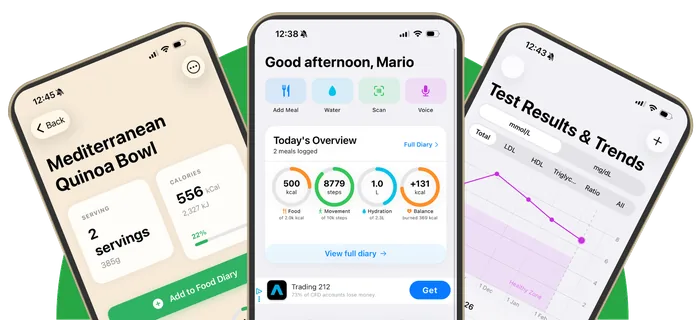
Scan or log pizza in Heart Tracker
Search the pizza you eat, or scan the box, to log saturated fat per slice and see how a pizza night fits your day.
- Barcode scanner
- LDL & HDL trends
- Voice meal logging
Related guides
Sources
- USDA FoodData Central: cheese pizza thin crust (FDC 170373), regular crust (170317), rising crust (170714), mozzarella part-skim (170847), cheddar (173414).
- de Goede J, et al. Effect of cheese consumption on blood lipids: a systematic review and meta-analysis of randomized controlled trials. Nutr Rev. 2015;73:259–275.
- American Heart Association: Saturated fat (aim for under 6% of calories, about 13 g on 2,000 calories).
- NHS: Fat, the facts (saturates: up to 30 g a day for men, 20 g for women).